Industrial Oil Mist Filter System: Advanced Air Purification for Manufacturing Facilities

Get a Free Quote

Our representative will contact you soon.
Email
Name
Company Name
Message
0/1000

industrial oil mist filter system

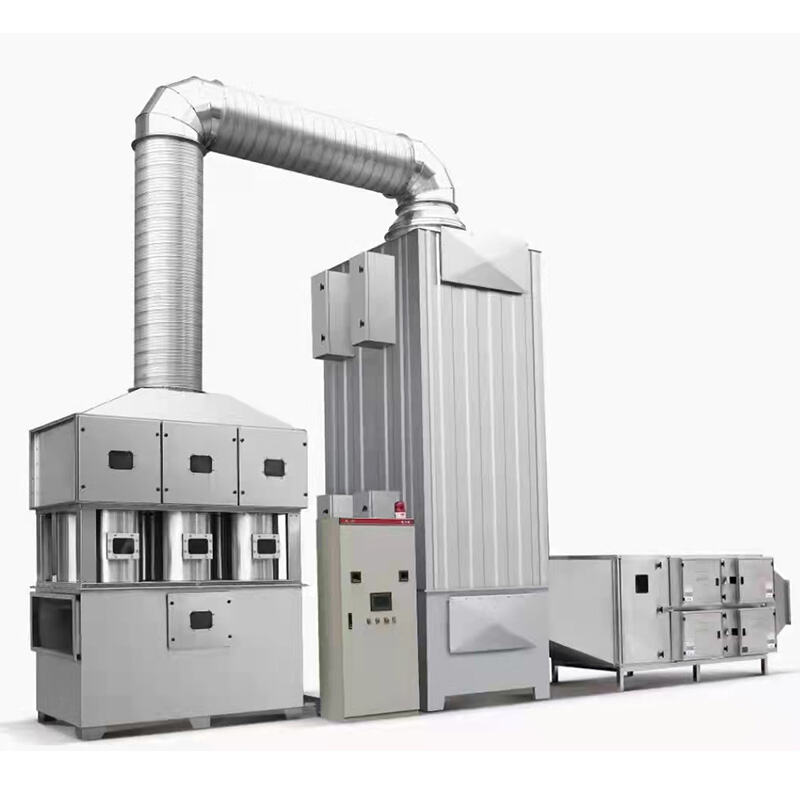
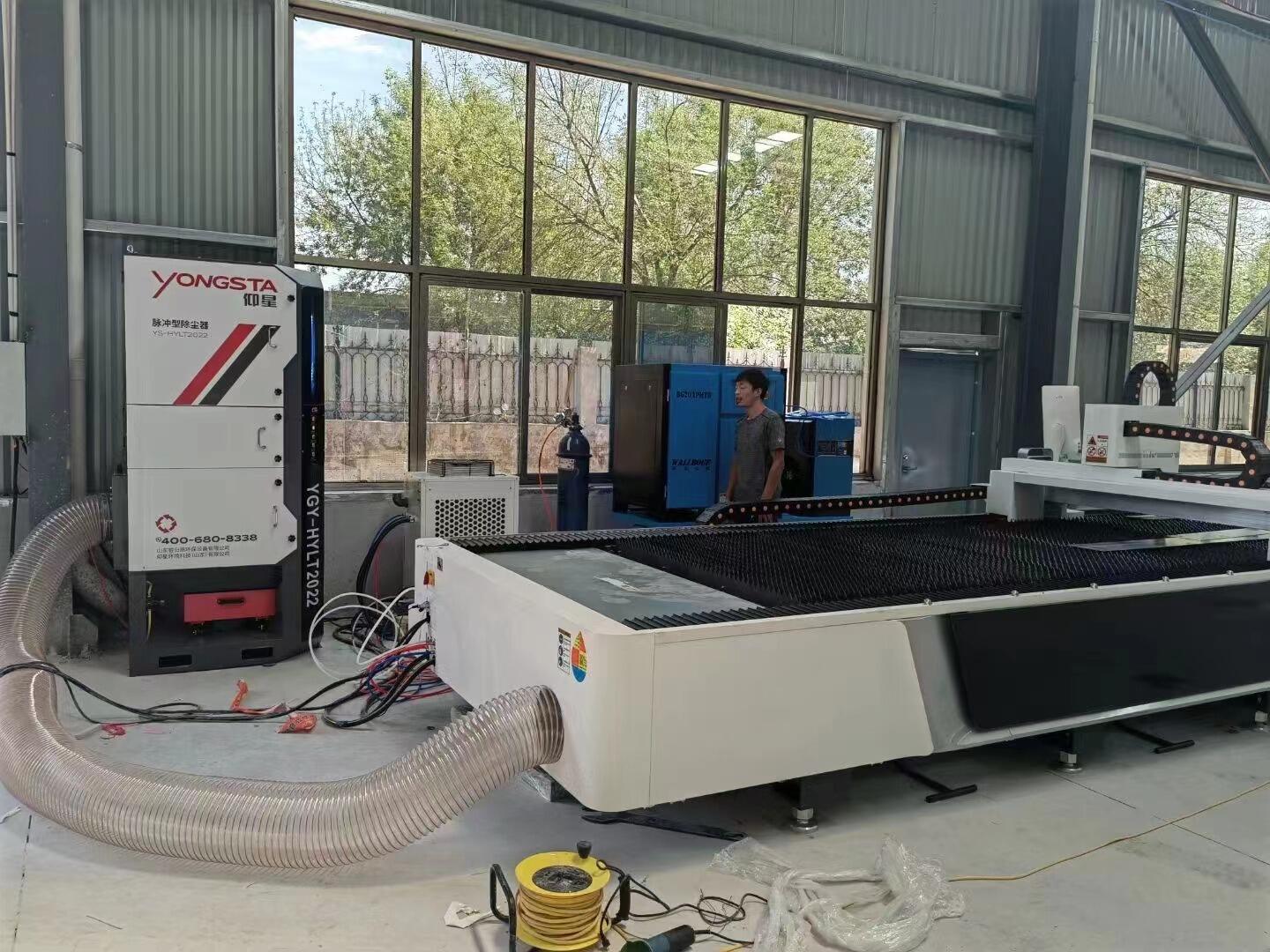
An industrial oil mist filter system represents a critical component in modern manufacturing environments where metalworking, machining, and precision operations generate airborne contaminants. This specialized filtration technology addresses the persistent challenge of oil mist, smoke, and fine particulate matter that emerges during cutting, grinding, milling, and other mechanical processes. The primary function of an industrial oil mist filter system centers on capturing and removing these hazardous aerosols before they disperse throughout the workspace or escape into the atmosphere. By implementing multi-stage filtration mechanisms, these systems protect both worker health and equipment longevity while maintaining compliance with environmental regulations. The technological foundation of an industrial oil mist filter system typically incorporates several filtration stages, beginning with pre-filters that capture larger particles and progressing through increasingly fine media that trap submicron oil droplets. Advanced models integrate electrostatic precipitation, mechanical separation, or coalescence technology to achieve filtration efficiencies exceeding 99 percent for particles as small as 0.3 microns. Modern industrial oil mist filter systems feature intelligent monitoring capabilities, including differential pressure sensors that indicate filter saturation, automated cleaning cycles that extend media life, and digital interfaces that provide real-time performance data. Applications span diverse manufacturing sectors, from automotive component production and aerospace machining to medical device manufacturing and general metalworking shops. Machine tool operations such as CNC machining centers, grinding equipment, honing machines, and gear cutting systems all benefit from dedicated oil mist filtration. The system connects directly to individual machines or serves multiple workstations through centralized ducting networks, offering flexibility in installation configurations. Beyond immediate air quality improvements, an industrial oil mist filter system delivers measurable operational benefits including reduced cleaning requirements, decreased coolant consumption through mist recapture, lower HVAC costs by enabling air recirculation, and enhanced product quality by minimizing oil contamination on finished surfaces.

New Products

Implementing an industrial oil mist filter system delivers tangible benefits that directly impact your bottom line and workplace environment. First and foremost, these systems dramatically improve air quality by removing harmful oil mist particles that would otherwise circulate throughout your facility. Workers breathe cleaner air, reducing respiratory complaints and creating a healthier environment that boosts morale and productivity. You will notice fewer sick days and lower health-related costs over time. The financial advantages extend beyond health benefits. An industrial oil mist filter system reduces facility maintenance dramatically because oil mist no longer settles on floors, walls, equipment, and products. Your cleaning crews spend less time scrubbing greasy residue from surfaces, and you avoid the safety hazards associated with slippery floors. Equipment lasts longer when protected from oil mist accumulation, which means fewer breakdowns and lower replacement costs for sensitive electronics, motors, and control systems. Energy savings represent another significant advantage. By filtering and recirculating air rather than exhausting it outdoors, an industrial oil mist filter system reduces heating and cooling expenses substantially. You maintain comfortable temperatures year-round without constantly replacing conditioned air with outside air that requires heating in winter or cooling in summer. Many facilities recover their investment in filtration equipment within two to three years through energy savings alone. Product quality improves measurably when you eliminate oil mist contamination. Finished parts emerge cleaner, requiring less post-processing and reducing rejection rates. This translates to higher customer satisfaction and fewer costly reworks. Regulatory compliance becomes straightforward with an industrial oil mist filter system properly installed and maintained. You meet or exceed air quality standards without complex monitoring programs or expensive exhaust treatment systems. Environmental responsibility enhances your company reputation, making it easier to attract quality employees and environmentally conscious customers. The system operates quietly in the background, requiring minimal operator intervention. Automated features handle routine functions, while alert systems notify maintenance staff when attention is needed. Installation flexibility means you can start with a single machine and expand coverage as budget allows, scaling your investment to match your growth. Modern industrial oil mist filter systems integrate seamlessly with existing equipment, requiring no major facility modifications. Compact designs fit into tight spaces, and modular components simplify future upgrades or capacity increases.

Latest News

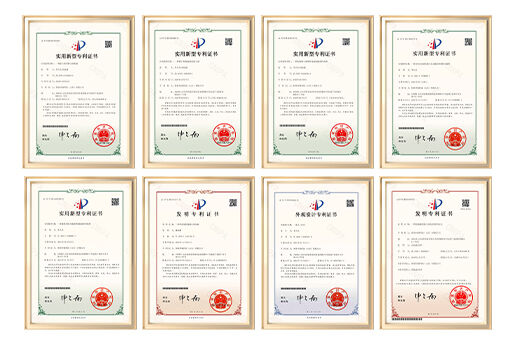
Yongsta R&D Team Wins 3 Dust Removal Technology Patents, Leading Industry Innovation

09

Apr

Yongsta R&D Team Wins 3 Dust Removal Technology Patents, Leading Industry Innovation

View More
Yongsta Cooperates with TUV for ATEX Explosion-Proof Certification, Explosion-Proof Dust Collector to Be Launched Soon

09

Apr

Yongsta Cooperates with TUV for ATEX Explosion-Proof Certification, Explosion-Proof Dust Collector to Be Launched Soon

View More
Empowering Benchmark Manufacturing! Yongsta Cartridge Dust Collector Aids Siemens Transformer China Factory's Dust Removal Renovation and Gains High Recognition

09

Apr

Empowering Benchmark Manufacturing! Yongsta Cartridge Dust Collector Aids Siemens Transformer China Factory's Dust Removal Renovation and Gains High Recognition

View More

Get a Free Quote

Our representative will contact you soon.
Email
Name
Company Name
Message
0/1000

industrial oil mist filter system

Advanced Multi-Stage Filtration Technology Ensures Maximum Contaminant Capture

Advanced Multi-Stage Filtration Technology Ensures Maximum Contaminant Capture

The cornerstone of any effective industrial oil mist filter system lies in its sophisticated multi-stage filtration approach, which systematically removes contaminants of varying sizes and characteristics. This layered strategy begins with a pre-filtration stage designed to intercept larger particles, metal chips, and coarse aerosols that could otherwise overwhelm finer filtration media. By removing these bulk contaminants first, the system protects downstream components and extends overall filter life significantly. The pre-filter typically employs durable materials capable of withstanding high particulate loads while maintaining adequate airflow, ensuring the industrial oil mist filter system operates efficiently even in demanding production environments. Following pre-filtration, the air stream encounters the primary filtration stage, where specialized media captures the majority of oil mist droplets through mechanical and coalescence mechanisms. This stage represents the heart of the industrial oil mist filter system, utilizing carefully engineered filter materials with precise pore structures that force oil particles to collide, merge, and drain away from the air stream. The coalescence process proves particularly effective for submicron oil droplets that resist simple mechanical filtration, transforming countless tiny droplets into larger masses that gravity pulls into collection reservoirs. Advanced industrial oil mist filter systems incorporate final polishing stages using HEPA-grade or activated carbon filters to capture any remaining fine particles and odors, delivering air quality that often exceeds outdoor ambient standards. This final filtration ensures that recirculated air poses no health risks and contains no residual contaminants that might settle on products or equipment. The multi-stage configuration also provides redundancy, so if one stage experiences temporary saturation or breakthrough, subsequent stages continue protecting air quality until maintenance occurs. Modern industrial oil mist filter systems enhance this mechanical filtration with electrostatic precipitation technology in some applications, where high-voltage fields charge particles and attract them to collection plates, achieving exceptional efficiency for the most challenging submicron aerosols. The combination of mechanical and electrostatic methods in a single industrial oil mist filter system delivers performance unattainable through either approach alone, capturing 99.97 percent or more of contaminants across the entire particle size spectrum. Maintenance accessibility represents another crucial advantage of multi-stage designs, as each filtration component can be serviced independently without shutting down the entire system, minimizing production disruptions and extending equipment uptime.
Intelligent Monitoring and Automated Maintenance Features Reduce Operating Costs

Intelligent Monitoring and Automated Maintenance Features Reduce Operating Costs

Contemporary industrial oil mist filter systems incorporate sophisticated monitoring and automation technologies that transform filtration from a passive process into an intelligent, self-optimizing operation. These smart features begin with differential pressure monitoring, where sensors continuously measure the pressure drop across each filtration stage, providing real-time indication of filter loading and remaining capacity. When pressure differential reaches predetermined thresholds, the industrial oil mist filter system alerts operators through visual indicators, audible alarms, or digital notifications sent directly to maintenance management systems. This proactive approach prevents filter saturation, which could compromise air quality or reduce system efficiency, while also preventing premature filter changes that waste money and resources. Advanced industrial oil mist filter systems take automation further by incorporating self-cleaning mechanisms that extend filter life dramatically. Pulse-jet cleaning systems, for example, periodically blast compressed air backward through filter media, dislodging accumulated particles into collection hoppers without interrupting system operation. This automated cleaning can extend filter service intervals by factors of five to ten compared to passive systems, reducing both material costs and labor requirements. Some industrial oil mist filter systems employ mechanical shakers or rotating brushes that physically dislodge contaminants, offering cleaning solutions for applications where compressed air is unavailable or undesirable. The intelligence built into modern systems extends to predictive maintenance capabilities, where historical performance data and current operating conditions combine to forecast when components will require service. Rather than following rigid maintenance schedules that may service filters too early or too late, predictive algorithms optimize service timing based on actual usage patterns, maximizing filter life while ensuring consistent performance. Digital interfaces on advanced industrial oil mist filter systems provide operators with comprehensive performance dashboards displaying airflow rates, filtration efficiency, energy consumption, and maintenance schedules. These interfaces often support remote monitoring, allowing facility managers to oversee multiple systems across different locations from a single control point, identifying performance trends and optimizing operations across the entire facility. Integration capabilities represent another significant advantage, as modern industrial oil mist filter systems communicate with building management systems, machine tool controllers, and enterprise resource planning software. This connectivity enables coordinated operations where the filtration system adjusts its performance based on production schedules, ramping up capacity during peak machining periods and reducing energy consumption during idle times. Automated oil recovery features in premium industrial oil mist filter systems collect captured coolant and lubricant, channeling it back to machine tool reservoirs or separate recovery tanks, transforming waste into reusable resources and further reducing operating costs.

Flexible Installation Options and Scalable Designs Accommodate Diverse Manufacturing Needs

Flexible Installation Options and Scalable Designs Accommodate Diverse Manufacturing Needs

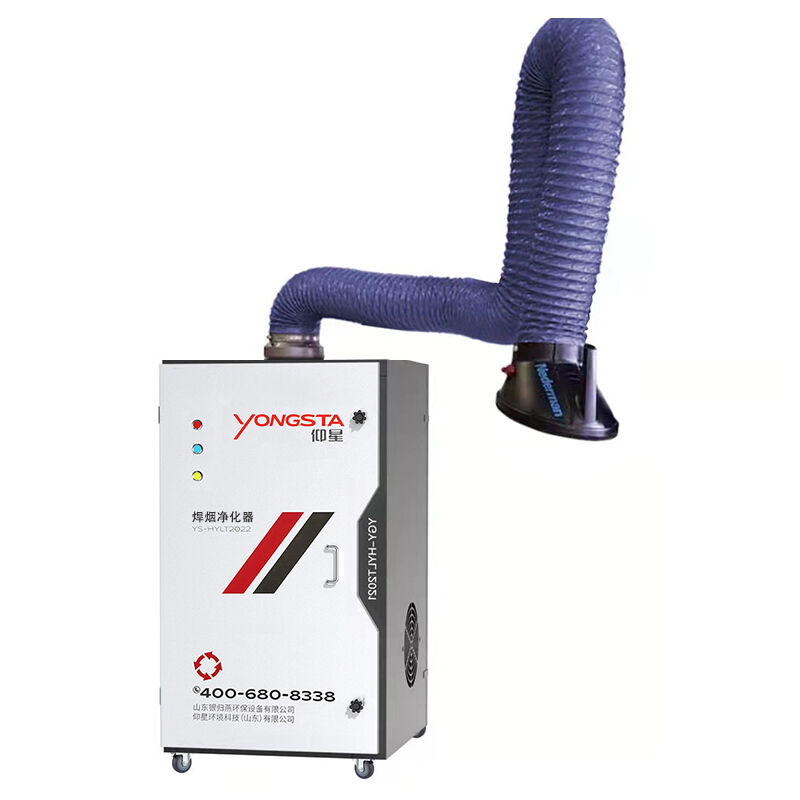
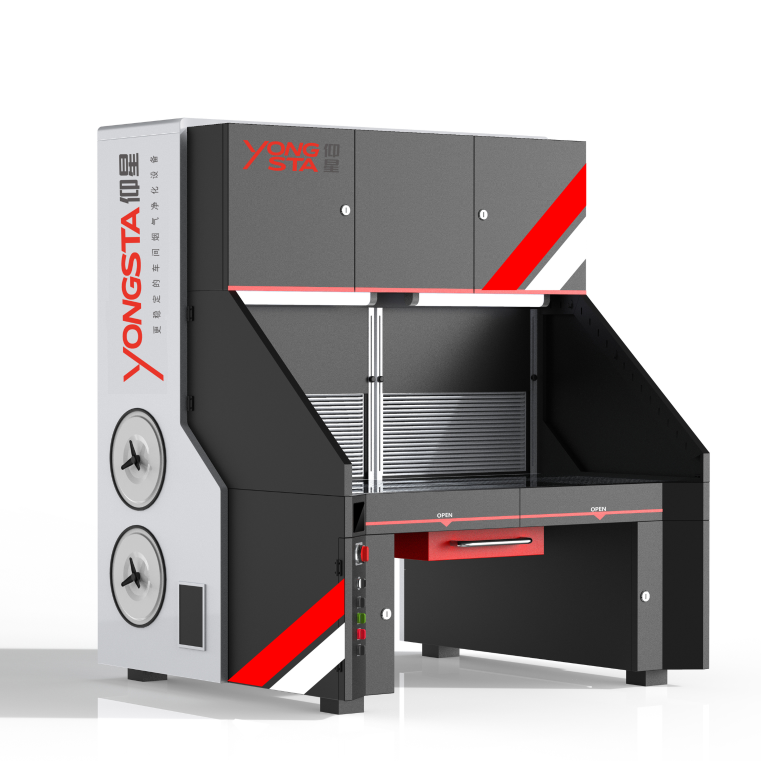
The versatility of modern industrial oil mist filter systems manifests through their adaptable installation configurations and scalable architectures, which accommodate facilities ranging from small job shops to expansive manufacturing complexes. Point-of-use installations represent the most straightforward approach, where individual industrial oil mist filter systems mount directly on or adjacent to specific machine tools, capturing contaminants at their source before they disperse into the workspace. This configuration offers several advantages including simplified installation with minimal ductwork, independent operation that allows machines to run without affecting others, and easy troubleshooting since each system serves a single source. Point-of-use industrial oil mist filter systems typically feature compact footprints designed to fit within the space constraints of crowded production floors, with mounting options including machine-top placement, wall mounting, or floor-standing configurations. For facilities with multiple machines generating oil mist, centralized industrial oil mist filter systems provide an economical alternative, where a single high-capacity unit serves multiple workstations through a network of collection hoods and ductwork. This approach reduces equipment costs compared to multiple point-of-use units, simplifies maintenance by consolidating service activities, and often achieves better overall efficiency through optimized airflow management. Centralized systems require more extensive installation planning to ensure proper duct sizing, adequate capture velocity at each machine, and balanced airflow distribution, but the long-term operational benefits typically justify the additional upfront engineering. Modular industrial oil mist filter systems offer the best of both approaches, starting with a base unit serving immediate needs while providing expansion capabilities as production grows. Additional filtration modules connect to the original system, increasing capacity without replacing existing equipment or disrupting operations. This scalability proves particularly valuable for growing manufacturers who need to manage capital expenditures carefully while maintaining flexibility for future expansion. The physical design of industrial oil mist filter systems also reflects diverse facility requirements, with horizontal and vertical orientations available to fit available space, and various inlet and outlet configurations to simplify ductwork routing. Explosion-proof models serve facilities handling flammable materials, incorporating spark-proof construction, grounded components, and specialized motors that meet hazardous location requirements. Outdoor-rated industrial oil mist filter systems feature weather-resistant enclosures and heating elements that ensure reliable operation in unheated facilities or external installations, expanding placement options and freeing valuable indoor space. Noise reduction represents another design consideration, with acoustic insulation and vibration dampening features available for installations near offices or noise-sensitive areas. Variable frequency drives on fan motors allow industrial oil mist filter systems to adjust airflow dynamically, matching filtration capacity to actual demand and reducing energy consumption during low-production periods. This adaptability ensures optimal performance across varying operating conditions while minimizing unnecessary energy expenditure and equipment wear.

Get a Free Quote

Our representative will contact you soon.
Email
Name
Company Name
Message
0/1000
email goToTop