
 EN
EN



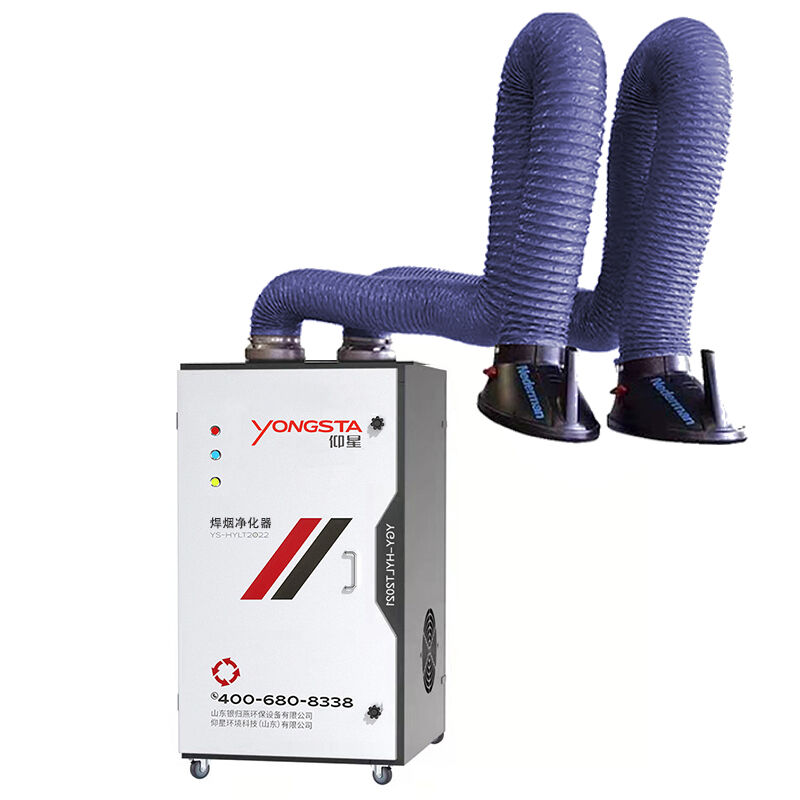
A portable fume extractor has become one of the most essential tools on modern industrial job sites. Whether workers are welding, cutting, or grinding, the harmful fumes and fine particles released during these operations pose serious health and safety risks. Choosing the right extraction solution can make a significant difference in worker health, regulatory compliance, and overall operational efficiency.

Unlike fixed ventilation systems, a portable fume extractor offers flexibility that suits a wide range of work environments. From outdoor construction sites to multi-station factory floors, this type of equipment adapts to where the work actually happens. Understanding the core advantages of a portable fume extractor helps businesses make informed purchasing decisions and better protect their workforce.
Flexibility and Mobility on the Job Site
Working Wherever the Task Demands
The most immediate advantage of a portable fume extractor is the ability to move it wherever it is needed most. Fixed extraction systems require workers to operate within a defined zone. A portable fume extractor eliminates that constraint entirely, allowing operators to position the extraction arm or nozzle precisely at the fume source. This targeted approach means the portable fume extractor captures harmful particles before they disperse into the breathing zone.
In industries such as metal fabrication, shipbuilding, and automotive repair, tasks frequently shift from one location to another. A portable fume extractor follows the workflow rather than forcing the workflow to adapt to a fixed system. This results in more consistent fume capture and reduced exposure across the entire shift. Every time a portable fume extractor is repositioned close to the source, its extraction efficiency improves significantly compared to relying on general ambient ventilation alone.
Adaptability Across Multiple Applications
A portable fume extractor is not limited to a single type of task. The same portable fume extractor used for MIG welding in the morning can be repositioned for plasma cutting or angle grinding later in the day. This versatility reduces the need to invest in multiple dedicated extraction units. For small and mid-sized operations, a portable fume extractor offers exceptional value by covering a range of hazardous processes with a single, mobile unit. Its design allows quick reconfiguration without downtime, keeping production moving and protection consistent.
Health Protection and Regulatory Compliance
Reducing Worker Exposure to Hazardous Fumes
The health case for using a portable fume extractor is compelling and well-supported by occupational health research. Welding fumes contain manganese, hexavalent chromium, and other toxic compounds that can cause long-term respiratory disease. A portable fume extractor captures these contaminants directly at the source, before they enter the air that workers breathe. Consistent use of a portable fume extractor across all fume-generating tasks is one of the most effective controls available in the industrial hierarchy of exposure management.
Beyond chronic disease prevention, a portable fume extractor also reduces the risk of acute irritation, headaches, and short-term respiratory distress. Workers who use a portable fume extractor regularly report better comfort during long shifts. Employers who invest in a portable fume extractor demonstrate a clear commitment to worker wellbeing, which also supports better morale and lower staff turnover. Providing a portable fume extractor is increasingly seen not just as a safety measure but as a standard of professional practice.
Meeting Workplace Safety Standards
Regulatory bodies in many countries have established exposure limits for welding fumes and metal dust. A portable fume extractor helps facilities stay within those legal limits by actively removing contaminants from the work area. Using a portable fume extractor as part of a documented safety program demonstrates due diligence during audits and inspections. Without adequate fume control, employers may face fines, production stoppages, or liability claims. The portable fume extractor provides a practical and auditable response to these regulatory demands. It is far easier to prove compliance when a portable fume extractor is actively deployed at every fume-generating workstation.
Cost Efficiency and Operational Benefits
Lower Infrastructure Investment
Installing a centralized, ducted extraction system in a facility requires significant capital investment, including ductwork, installation labor, and ongoing maintenance of a complex infrastructure. A portable fume extractor eliminates these upfront costs. A portable fume extractor can be purchased, deployed, and operational within the same day. For businesses operating in leased spaces or temporary locations, a portable fume extractor is the only practical extraction solution because it does not require permanent structural modifications. This makes a portable fume extractor especially attractive for contractors, rental operations, and facilities that relocate operations periodically.
Maintenance of a portable fume extractor is also more straightforward than maintaining a large central system. Filter replacement and cleaning are performed on the individual unit, reducing both complexity and cost. Many portable fume extractor models include manual filter cleaning mechanisms that extend filter life and reduce consumable expenses over time. When a portable fume extractor requires servicing, the impact on production is minimal because other units or the same unit can be quickly returned to operation.
Productivity and Workflow Integration
A portable fume extractor integrates into the natural flow of work without creating bottlenecks. Workers do not need to interrupt their tasks to move to a designated ventilated area. Instead, the portable fume extractor comes to the worker, enabling continuous and efficient operation. In high-throughput environments, this contribution to workflow efficiency translates directly into measurable productivity gains. A portable fume extractor that captures fumes effectively also means less time spent on cleaning surfaces and equipment contaminated by fume residue, which adds another layer of operational savings.
FAQ
What makes a portable fume extractor different from a standard shop vacuum?
A portable fume extractor is specifically designed to capture fine metallic particles and toxic gases produced during welding, cutting, and grinding. Standard shop vacuums are not built with the high-efficiency filters required to trap ultrafine fume particles. A portable fume extractor uses HEPA or equivalent filtration that meets industrial safety standards, whereas a shop vacuum would simply recirculate hazardous particles back into the air.
How often should the filters in a portable fume extractor be replaced or cleaned?
Filter maintenance frequency for a portable fume extractor depends on usage intensity and the type of fumes being captured. In heavy welding environments, filter inspection should occur weekly, with cleaning or replacement scheduled based on observed airflow reduction. Many portable fume extractor models feature manual pulse-cleaning or mechanical filter cleaning systems that restore suction performance without requiring full filter replacement, extending service intervals significantly.
Can a single portable fume extractor serve multiple workstations simultaneously?
A single portable fume extractor is generally designed to serve one primary extraction point at a time for maximum capture efficiency. Running multiple extraction arms from a single portable fume extractor may reduce airflow at each point below effective capture velocity. For multi-station environments, the best practice is to deploy one portable fume extractor per active workstation or use a higher-capacity unit specifically rated for multi-arm operation.

