
 EN
EN



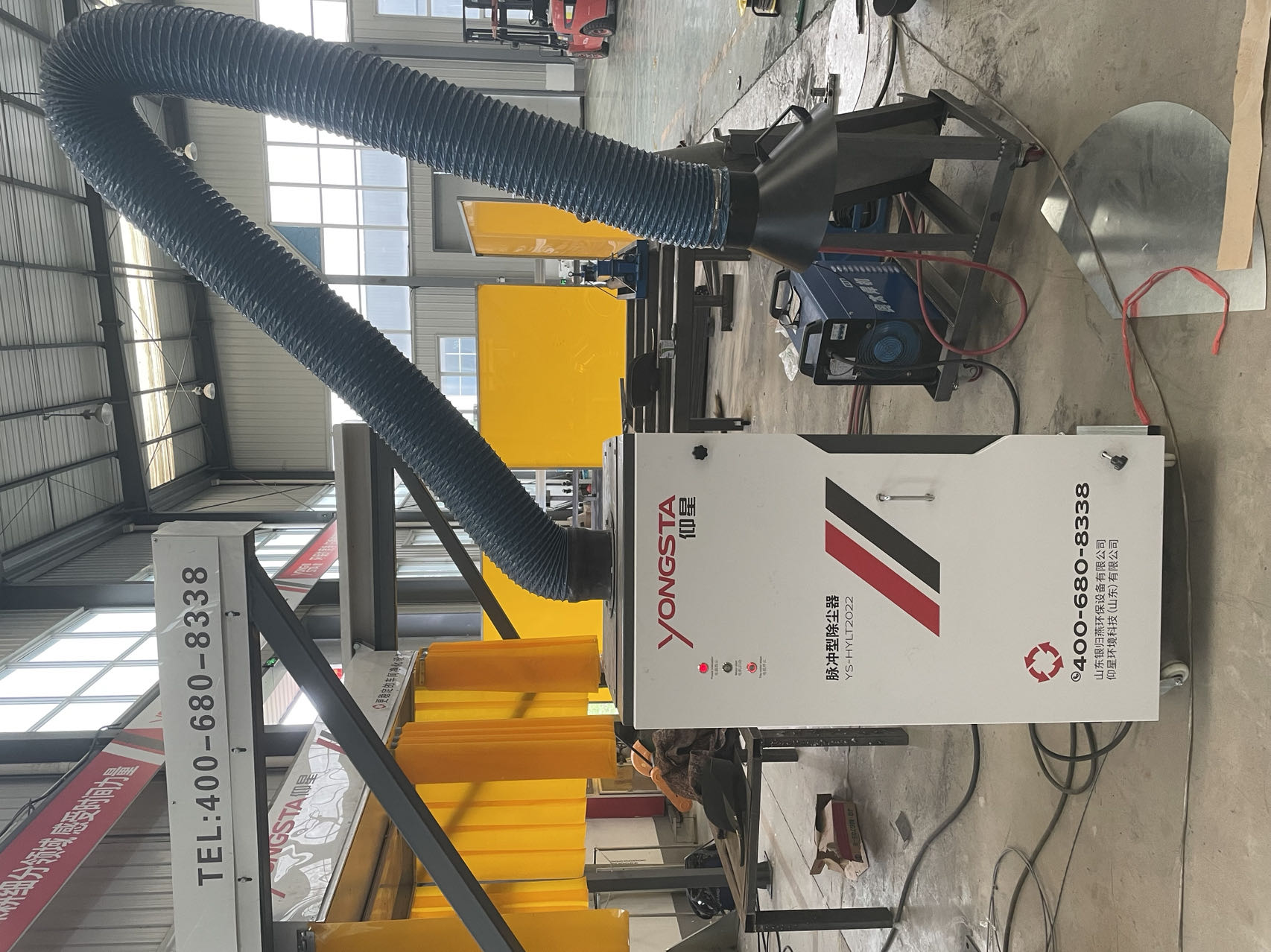
The claim that a welding fume extractor can capture 99.9% of harmful particles is widely cited in product specifications, but many buyers reasonably wonder whether that figure holds up in real workshop conditions. A welding fume extractor is designed to pull airborne contaminants — ultrafine metal particles, toxic gases, and carcinogenic compounds — away from the welder's breathing zone before they can cause harm. Understanding what the 99.9% claim actually means requires looking at filtration technology, airflow design, and how a welding fume extractor is used and maintained on the job.
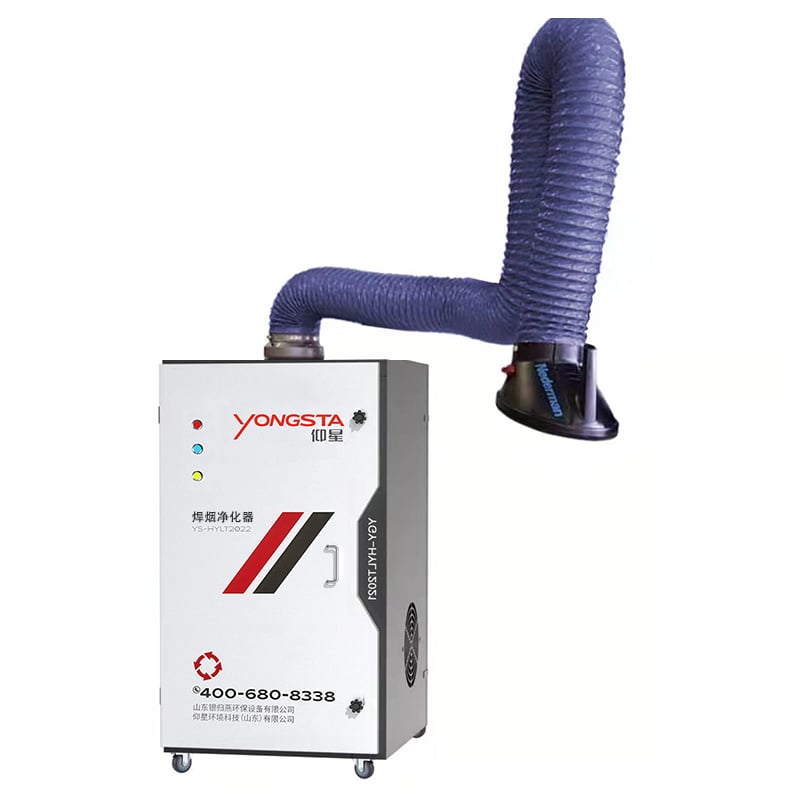
A welding fume extractor achieves high particle capture rates through a combination of pre-filters, HEPA-grade main filters, and activated carbon layers. Each stage of the welding fume extractor targets a different category of contaminant, from coarse spatter fragments to submicron respiratory hazards. When a welding fume extractor is correctly specified, properly installed, and regularly serviced, capture efficiency above 99% is genuinely achievable — but that result depends on several critical variables that every buyer and safety manager should understand before committing to a unit.
How a Welding Fume Extractor Achieves High Filtration Efficiency
The Role of Multi-Stage Filtration in a Welding Fume Extractor
A modern welding fume extractor typically uses a multi-stage filtration system to reach high efficiency ratings. The first stage of a welding fume extractor usually consists of a coarse pre-filter that captures larger spatter and metallic debris. This protects the main filter inside the welding fume extractor from premature clogging, preserving airflow performance over time. By blocking the largest particles early, the welding fume extractor ensures that its high-efficiency filter focuses exclusively on fine and ultrafine hazardous particles.
The core filter stage of a welding fume extractor is typically a HEPA-grade or equivalent high-efficiency particulate filter, rated to capture particles as small as 0.3 microns at 99.97% efficiency under standardized test conditions. For a welding fume extractor operating in real workshop environments, this means the vast majority of manganese fumes, chromium particles, and iron oxide dust are captured before the cleaned air is returned to the workspace. Some welding fume extractor models also incorporate an activated carbon layer to adsorb toxic gases such as ozone and nitrogen oxides that standard particulate filters cannot trap.
Airflow Design and Capture Velocity in the Welding Fume Extractor
A welding fume extractor's filtration rating alone does not guarantee real-world performance. The extraction arm or suction nozzle of the welding fume extractor must be positioned close enough to the welding arc to achieve adequate capture velocity. Industry guidance generally recommends that the intake of a welding fume extractor be placed within 150 to 300 millimeters of the fume source for reliable capture. If the welding fume extractor intake is positioned too far away, a significant fraction of fumes disperses into the ambient air before the welding fume extractor can collect them — reducing effective capture well below the filter's rated efficiency.
Factors That Affect Welding Fume Extractor Performance in Practice
Filter Maintenance and the Welding Fume Extractor Service Cycle
A welding fume extractor operating with a clogged or saturated filter delivers dramatically reduced performance, regardless of its original efficiency rating. As the filter inside a welding fume extractor loads with captured particles, airflow resistance increases and suction velocity drops. This means a neglected welding fume extractor may allow hazardous fumes to escape even though its filter technically retains a high efficiency rating under clean conditions. Regular filter inspection and replacement is therefore a non-negotiable part of using any welding fume extractor effectively.
Manual-cleaning welding fume extractor models allow maintenance personnel to clean filter media on-site, reducing consumable costs and downtime compared with replace-only designs. A welding fume extractor with manual filter cleaning capability can be restored to near-original airflow without a full filter swap, which is particularly valuable in high-volume production environments. Operators should still replace the filter media in a manual-cleaning welding fume extractor at the manufacturer-recommended intervals to ensure that filtration efficiency remains within specification.
Matching the Welding Fume Extractor to the Application
Not every welding fume extractor is suitable for every welding process. A welding fume extractor rated for MIG welding may not provide sufficient airflow volume or filter protection when used for stainless steel TIG welding, which generates hexavalent chromium — one of the most hazardous fume components encountered in industrial settings. Selecting a welding fume extractor based on the specific materials, processes, and fume generation rates involved in your operations is essential. A correctly matched welding fume extractor can consistently achieve the high capture rates cited in its specifications; a mismatched unit may fall significantly short.
The physical workspace also affects welding fume extractor effectiveness. In confined spaces, a welding fume extractor may need supplementary ventilation to prevent recirculation of partially filtered air. In open workshops, drafts and cross-ventilation can disrupt the capture zone of a welding fume extractor if the extraction arm is not properly positioned. Understanding these environmental factors allows safety managers to deploy a welding fume extractor in a configuration that reliably protects workers rather than merely meeting a checkbox on a compliance form.
Understanding Certifications and Real-World Claims for a Welding Fume Extractor
What Industry Standards Say About the Welding Fume Extractor
The 99.9% figure associated with a welding fume extractor typically reflects performance under controlled laboratory conditions using standardized test aerosols at specific airflow rates. Standards such as EN ISO 21904 and W3 classification frameworks define minimum performance thresholds that a welding fume extractor must meet to carry a certified rating. When a welding fume extractor carries a recognized certification, buyers can trust that independent testing has verified its filtration claims under defined conditions. This is a meaningful quality signal, though it must be understood alongside real-world operating variables.
Certified performance data for a welding fume extractor gives procurement teams a reliable basis for comparison. However, the welding fume extractor that truly delivers on its rated efficiency in daily production is the one that is correctly installed, regularly maintained, and matched to the welding process it serves. A welding fume extractor with proper certification and a disciplined maintenance schedule is the most practical path to achieving and sustaining high particle capture rates in any industrial facility.
FAQ
Does a welding fume extractor filter need to be replaced frequently?
The replacement frequency for a welding fume extractor filter depends on usage intensity, the materials being welded, and whether the unit supports manual cleaning. A welding fume extractor used in high-volume production may require filter inspection weekly, while a welding fume extractor in light-duty applications may only need service monthly. Always follow the manufacturer's guidance to maintain peak welding fume extractor efficiency.
Can one welding fume extractor protect multiple welding stations?
A single welding fume extractor is generally designed to serve one welding position at a time, because capture effectiveness depends on the extraction arm being positioned close to the fume source. For multiple stations, each workstation should have its own dedicated welding fume extractor or a centralized system with individual extraction points. Using one underpowered welding fume extractor across several stations will reduce capture efficiency significantly.
Is a welding fume extractor enough on its own for regulatory compliance?
A welding fume extractor is a primary engineering control that significantly reduces welder exposure to harmful particles and gases. In most regulatory frameworks, using a certified welding fume extractor alongside general ventilation and appropriate respiratory protective equipment represents the correct layered approach. Relying solely on a welding fume extractor without assessing residual exposure may not satisfy all compliance requirements in your jurisdiction.

