
 EN
EN



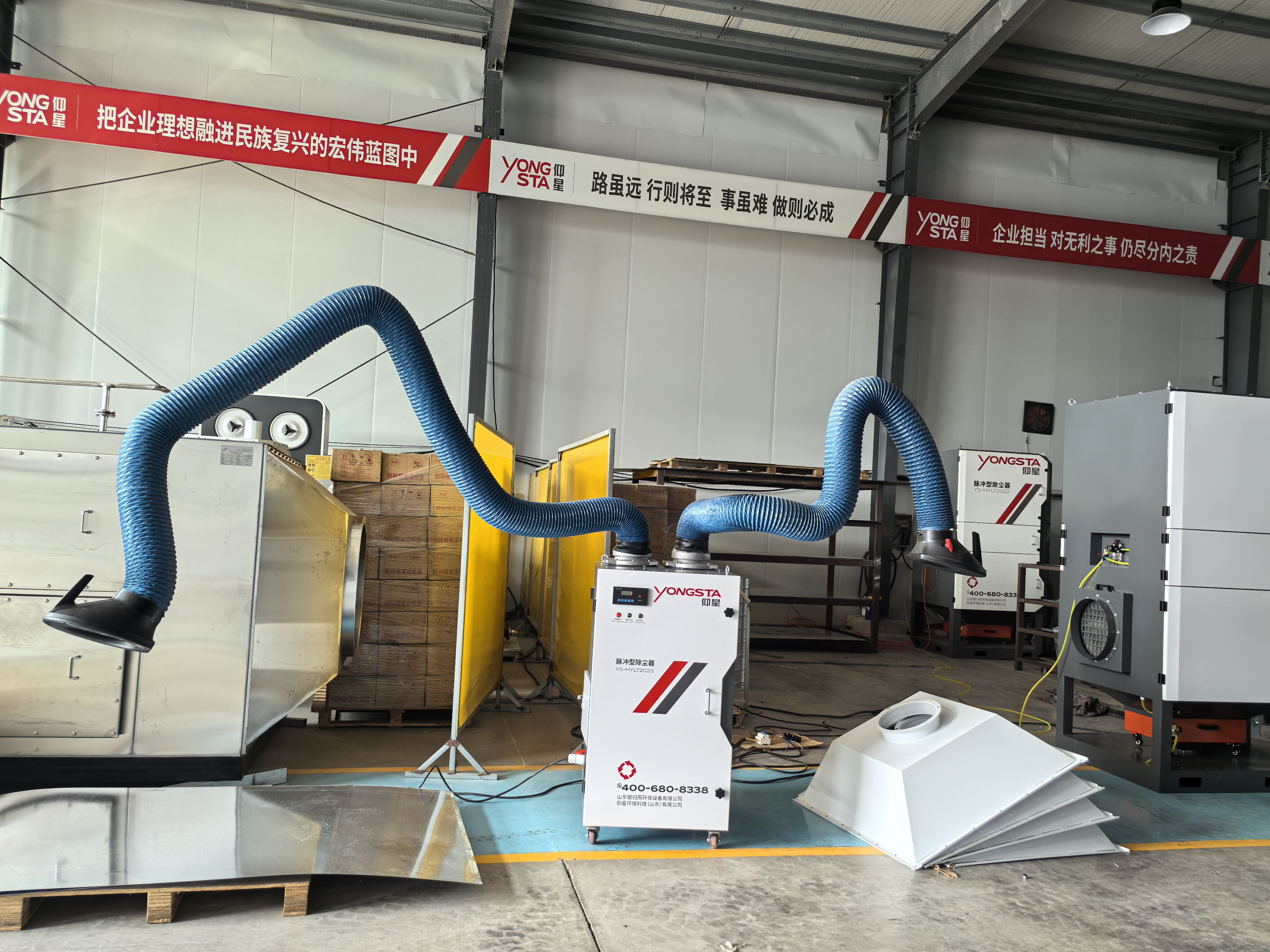
Walk into any active fabrication or metalworking shop and you will immediately notice the haze hanging in the air. That haze is not harmless steam — it is a complex mixture of fine metallic particles, toxic gases, and chemical compounds generated every time an arc strikes or a cutting torch ignites. A high-efficiency welding fume purifier is the single most effective line of defense against these invisible hazards, and its absence in a professional shop setting carries consequences that reach far beyond a slight cough or sore throat.
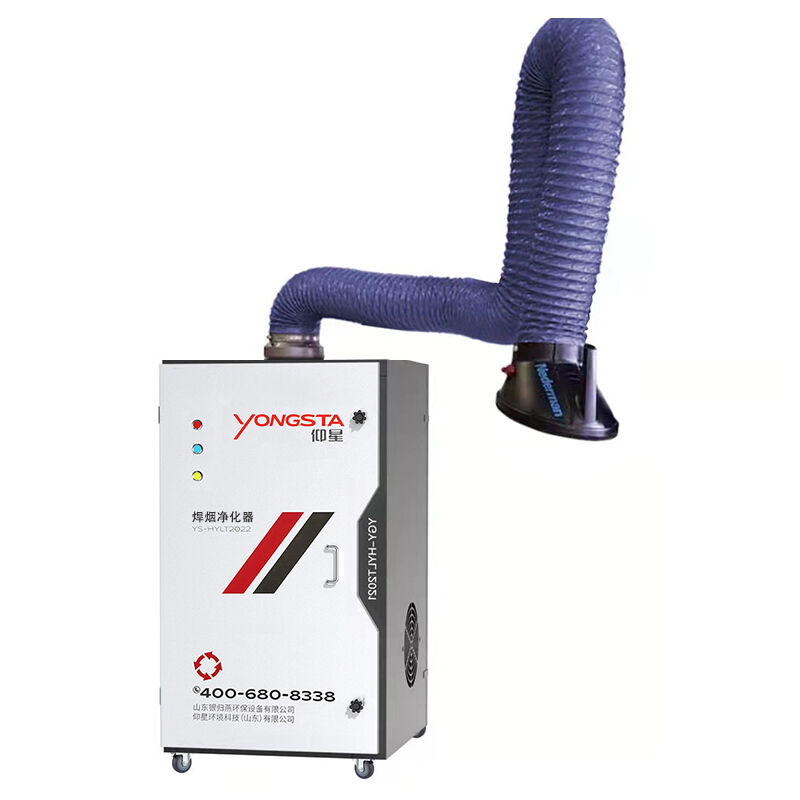
Whether a shop handles light MIG welding on mild steel or heavy-duty plasma cutting on stainless alloys, the fundamental challenge remains the same: airborne contaminants must be captured at the source, filtered efficiently, and expelled cleanly before they accumulate. Understanding exactly why a high-efficiency welding fume purifier is not merely optional but genuinely essential helps shop owners, safety managers, and production supervisors make informed decisions that protect their people, their equipment, and their long-term business viability.
The Real Composition of Welding Fumes and Why It Demands Serious Filtration
What Welding Fumes Actually Contain
Most people assume welding fumes are simply smoke, but the reality is significantly more complex. During the welding or cutting process, base metals, coatings, electrodes, and shielding gases all react at extremely high temperatures to produce a heterogeneous aerosol. This aerosol contains ultra-fine particulates, often smaller than one micron in diameter, which bypass the body's natural upper-airway defenses and penetrate deep into lung tissue.
Depending on the base material and consumables being used, those fine particles may carry manganese, hexavalent chromium, nickel compounds, zinc oxides, iron oxides, and various flux-related byproducts. Each of these substances has its own toxicological profile, and long-term exposure to their combination creates cumulative health risks that go well beyond temporary irritation. A properly specified welding fume purifier must be capable of capturing particles across this entire size spectrum, which is why filtration efficiency — not just airflow volume — is the defining performance metric.
Gaseous co-contaminants are an equally important consideration. Ozone, nitrogen oxides, and carbon monoxide are generated during arc welding and high-temperature cutting processes. Standard dust-capture filters are not designed to handle gaseous pollutants, which means a welding fume purifier intended for comprehensive air quality control must incorporate multi-stage filtration that addresses both particulate and gaseous fractions simultaneously.
Why High Efficiency Matters More Than Basic Extraction
There is a critical distinction between basic extraction and high-efficiency filtration. A basic exhaust fan or low-grade vacuum unit may move air and reduce visible smoke in the immediate area, but it does not necessarily capture the submicron particles that pose the greatest biological risk. A high-efficiency welding fume purifier, by contrast, uses HEPA-grade or equivalent filter media with removal efficiencies of 99.97% or higher at the most penetrating particle size.
This performance gap is not a minor technical detail — it is the difference between a genuine health protection system and a cosmetic air-movement solution. Shops that invest in low-cost, low-efficiency extraction often discover, through increased absenteeism and long-term health claims, that the apparent savings were far outweighed by the downstream human and financial costs. Choosing a welding fume purifier on the basis of verified filtration efficiency rather than price alone is therefore a decision with profound practical consequences.
Regulatory and Compliance Reasons That Make a Welding Fume Purifier Non-Negotiable
Evolving Occupational Exposure Limits
Workplace air quality regulations have tightened considerably in recent years, particularly around welding fumes. Regulatory bodies in multiple major economies have reclassified welding fume as a Group 1 human carcinogen, leading to a significant reduction in permissible exposure limits. This reclassification has direct operational implications for any shop where welding, cutting, or grinding operations are performed on a regular basis.
Compliance with these revised limits is not achievable through general ventilation alone in most enclosed or semi-enclosed shop environments. A dedicated welding fume purifier installed at or near the point of generation is typically the only technically feasible and economically practical means of keeping worker exposure consistently within legal thresholds. Failure to comply exposes employers to enforcement actions, substantial fines, and potential civil liability that can be financially devastating for small and medium-sized fabrication businesses.
Documentation, Audits, and Insurance Implications
Beyond the immediate compliance question, the presence of a properly maintained welding fume purifier also plays a significant role during regulatory audits and insurance reviews. Inspectors look for documented evidence that employers have taken technically adequate control measures, not merely posted warning signs or distributed respiratory protective equipment. A welding fume purifier with verifiable filter change logs and airflow performance records demonstrates a systematic, engineering-level approach to hazard control.
Insurance underwriters increasingly assess industrial hygiene practices when pricing workers' compensation and liability coverage for metalworking operations. Shops that can demonstrate proper fume extraction infrastructure — including a high-efficiency welding fume purifier — often benefit from more favorable premium assessments. Conversely, shops that rely solely on personal protective equipment and general ventilation may find their coverage terms increasingly restrictive as awareness of welding-related health risks grows within the insurance industry.
Operational and Productivity Benefits That Justify the Investment
Reduced Downtime and Maintenance Costs
The business case for a high-efficiency welding fume purifier extends well beyond health and compliance considerations. Fine metallic dust and oil-laden fume particles settle onto every surface within a shop environment, including electrical enclosures, CNC machine components, precision measuring instruments, and conveyor systems. This particulate accumulation accelerates wear, promotes corrosion, and increases the frequency of unplanned maintenance interventions across the entire facility.
A welding fume purifier that captures contaminants at the source before they can disperse throughout the shop dramatically reduces this secondary contamination burden. Shops that have made the transition from open ventilation to source-capture filtration consistently report lower machine maintenance costs, longer bearing and seal service lives, and reduced frequency of electrical system failures attributable to conductive dust accumulation. These savings compound over time and contribute meaningfully to the total return on investment.
Worker Performance and Retention
Skilled welders and fabricators are not easily replaced, and their long-term productivity is directly influenced by the conditions in which they work. Prolonged exposure to fume-laden air — even at levels that fall below immediate danger thresholds — causes chronic fatigue, reduced concentration, and cumulative respiratory impairment. Workers who spend their shifts in environments equipped with an effective welding fume purifier consistently report higher comfort levels and are able to maintain focus and precision over longer work periods.
From a retention standpoint, providing a visibly safe and well-equipped work environment signals to skilled employees that the organization values their long-term health. In labor markets where experienced welders are in short supply, this operational investment in air quality can be a meaningful differentiator when attracting and retaining talent. The welding fume purifier thus functions not only as a safety device but as an element of the shop's overall employment value proposition.
There is also a direct quality argument. Precision welding work requires steady hands, clear vision, and sustained concentration. When respiratory irritation, eye watering, and headaches are eliminated through proper fume control, the quality of welds improves and rework rates decline. A welding fume purifier therefore contributes to end-product quality in ways that may not be immediately obvious but are measurable in defect rates and inspection pass ratios over time.
Selecting the Right Welding Fume Purifier for Shop Conditions
Matching Unit Capacity to Shop Volume and Process Intensity
Not all welding fume purifier units are interchangeable, and selecting an appropriately specified system requires honest assessment of the shop's actual operating conditions. Key variables include the total volume of the work area, the number of simultaneous welding stations, the types of processes being performed, the base materials and coatings involved, and the frequency and duration of peak-load periods. Undersizing a welding fume purifier leads to chronic under-performance; oversizing leads to unnecessary capital expenditure and operating cost.
For shops performing manual welding, cutting, and grinding across multiple workstations, a unit designed with flexible capture arm positioning and sufficient airflow capacity to cover the active work zones is essential. The ability to direct the capture inlet close to the fume generation point significantly improves capture efficiency and reduces the total volume of air that must be processed, which in turn extends filter service life and reduces operating costs associated with replacement media.
Filter Technology and Maintenance Accessibility
The long-term effectiveness of any welding fume purifier is contingent on its maintenance accessibility and the quality of its filter media. Systems that are difficult to service tend to accumulate deferred maintenance, which progressively degrades their capture efficiency and may create secondary hazards when filter changeouts are finally performed under high-load conditions. Shops should prioritize welding fume purifier designs that allow filter inspection and replacement with minimal downtime and without requiring specialized tools or procedures.
Multi-stage filtration systems that separate coarse particles in a pre-filter stage before loading the primary HEPA or equivalent filter offer significantly better total cost of ownership. Pre-filters are far less expensive than primary filter elements and can extend the service life of the high-efficiency media by a factor of several times. When evaluating a welding fume purifier for procurement, total lifecycle cost — including filter media, labor for maintenance, and eventual disposal of contaminated filter elements — should be factored into the comparison alongside initial purchase price.
FAQ
What makes a welding fume purifier different from a standard shop vacuum or dust collector?
A standard shop vacuum or dust collector is designed to handle relatively large particles and moderate dust loads. A welding fume purifier is specifically engineered to capture submicron metallic particles, toxic aerosols, and gaseous co-contaminants generated during welding, cutting, and grinding. The filter media, airflow management systems, and sealing standards in a proper welding fume purifier are fundamentally different from those found in general-purpose dust collection equipment.
How often should the filters in a welding fume purifier be replaced?
Filter replacement intervals depend on the intensity of use, the types of materials being processed, and whether a pre-filter stage is in place. In a busy shop with continuous welding operations, primary filter elements in a welding fume purifier may require replacement every few months. Systems with effective pre-filtration can extend this interval considerably. The most reliable approach is to monitor differential pressure across the filter assembly and replace elements when resistance reaches the manufacturer's specified threshold rather than following a fixed calendar schedule.
Can a single welding fume purifier unit serve an entire multi-station shop?
In most cases, a single unit is insufficient for a multi-station operation unless the shop layout is very compact and welding activity is never simultaneous across all stations. The general recommendation is to position a welding fume purifier as close as possible to each active work zone. Mobile or flexible-arm units allow a single device to serve multiple workstations in sequence if simultaneous operation is not required, but shops with continuous parallel operations typically need multiple units or a centralized ducted extraction system to maintain compliant air quality throughout the facility.
Is a welding fume purifier still necessary if welders wear respirators?
Respiratory protective equipment is considered a last-resort control measure in occupational hygiene hierarchy, not a primary engineering solution. A welding fume purifier addresses the hazard at its source and reduces airborne contamination across the entire work environment, protecting not only the welder but also nearby workers, supervisors, and visitors. Relying solely on respirators leaves ambient air contamination unaddressed, accelerates equipment fouling, and places the full compliance burden on consistent and correct personal protective equipment use — an unreliable single point of failure in any serious safety program.
Table of Contents
- The Real Composition of Welding Fumes and Why It Demands Serious Filtration
- Regulatory and Compliance Reasons That Make a Welding Fume Purifier Non-Negotiable
- Operational and Productivity Benefits That Justify the Investment
- Selecting the Right Welding Fume Purifier for Shop Conditions
-
FAQ
- What makes a welding fume purifier different from a standard shop vacuum or dust collector?
- How often should the filters in a welding fume purifier be replaced?
- Can a single welding fume purifier unit serve an entire multi-station shop?
- Is a welding fume purifier still necessary if welders wear respirators?

