Industrial Fume Purifier with HEPA and Activated Carbon - Advanced Air Filtration System

Get a Free Quote

Our representative will contact you soon.
Email
Name
Company Name
Message
0/1000

fume purifier with hepa and activated carbon

A fume purifier with HEPA and activated carbon represents an advanced air filtration system designed to remove harmful airborne contaminants from industrial and commercial environments. This dual-filtration technology combines two powerful purification methods to address different types of pollutants effectively. The HEPA filter component captures microscopic particles including dust, smoke particles, metal fumes, and other solid contaminants down to 0.3 microns with an efficiency rate of 99.97 percent. Meanwhile, the activated carbon layer specializes in adsorbing gaseous pollutants, chemical vapors, volatile organic compounds, and odors that HEPA filters alone cannot eliminate. This comprehensive approach makes the fume purifier with HEPA and activated carbon particularly valuable in settings where both particulate matter and chemical fumes pose health risks. Common applications include welding workshops, laser engraving facilities, soldering stations, chemical laboratories, pharmaceutical manufacturing plants, and electronics assembly lines. The system typically operates by drawing contaminated air through a multi-stage filtration process, where larger particles are captured first by pre-filters, followed by HEPA filtration for fine particles, and finally activated carbon treatment for chemical vapors. Modern units often feature variable speed controls, allowing operators to adjust airflow rates based on the intensity of fume generation. Many models incorporate monitoring systems that track filter saturation levels and alert users when replacement becomes necessary, ensuring consistent performance. The compact design of most fume purifiers with HEPA and activated carbon allows for flexible installation options, including benchtop placement, wall mounting, or integration into existing ventilation systems. Energy efficiency has become a priority in newer models, with manufacturers implementing brushless motors and optimized airflow designs that reduce power consumption while maintaining strong suction capabilities. The combination of HEPA and activated carbon filtration provides comprehensive protection against the diverse range of contaminants generated in modern industrial processes, making this technology essential for maintaining safe working environments and regulatory compliance.

New Product Recommendations

The fume purifier with HEPA and activated carbon delivers substantial benefits that directly impact workplace safety, operational efficiency, and long-term cost savings. First and foremost, this dual-filtration system protects worker health by removing both visible and invisible airborne hazards. Employees working near welding operations, soldering stations, or chemical processes face daily exposure to harmful fumes that can cause respiratory problems, headaches, and long-term health complications. By capturing these contaminants at the source, the fume purifier with HEPA and activated carbon creates a cleaner breathing environment, reducing sick days and improving overall workforce wellbeing. The system operates quietly compared to traditional exhaust ventilation, allowing workers to communicate effectively and maintain focus without constant background noise disruption. Installation proves remarkably straightforward, with most units requiring only a standard electrical outlet and minimal setup time. Unlike complex ductwork systems that demand extensive construction and building modifications, a fume purifier with HEPA and activated carbon can be positioned exactly where needed and relocated as production layouts change. This flexibility becomes particularly valuable for businesses that frequently reconfigure their workspace or operate in leased facilities where permanent ventilation modifications are not feasible. The dual-filtration approach also delivers superior air quality compared to single-stage systems. HEPA filters excel at trapping solid particles but allow chemical vapors to pass through, while activated carbon effectively adsorbs gases and odors but cannot capture particulate matter. By combining both technologies, the fume purifier with HEPA and activated carbon addresses the complete spectrum of air quality challenges in one compact unit. Energy consumption remains low because the system recirculates filtered air back into the workspace rather than exhausting conditioned air outdoors, which would force heating and cooling systems to work harder to maintain comfortable temperatures. This recirculation capability translates to significant utility savings, especially in climates with extreme temperatures. Maintenance requirements stay minimal and predictable, with filter replacement representing the primary ongoing task. Most manufacturers design their fume purifiers with HEPA and activated carbon for tool-free filter access, allowing maintenance staff to complete replacements quickly without specialized training or equipment. The system also helps businesses meet occupational safety regulations and environmental standards by demonstrating proactive measures to control workplace air quality. Regulatory compliance becomes simpler when companies can document their use of certified filtration equipment, potentially reducing insurance premiums and avoiding costly citations. Furthermore, the fume purifier with HEPA and activated carbon protects sensitive equipment and products from contamination. In electronics manufacturing, for example, airborne particles can cause defects in circuit boards and components, leading to quality issues and product failures. By maintaining cleaner air throughout the facility, these purification systems contribute to higher production yields and fewer warranty claims. The return on investment becomes evident within months as businesses experience reduced health-related absences, lower energy bills, improved product quality, and enhanced regulatory compliance.

Practical Tips

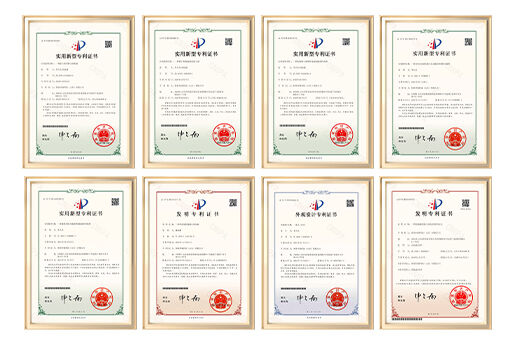
Yongsta R&D Team Wins 3 Dust Removal Technology Patents, Leading Industry Innovation

09

Apr

Yongsta R&D Team Wins 3 Dust Removal Technology Patents, Leading Industry Innovation

View More
Yongsta Cooperates with TUV for ATEX Explosion-Proof Certification, Explosion-Proof Dust Collector to Be Launched Soon

09

Apr

Yongsta Cooperates with TUV for ATEX Explosion-Proof Certification, Explosion-Proof Dust Collector to Be Launched Soon

View More
Empowering Benchmark Manufacturing! Yongsta Cartridge Dust Collector Aids Siemens Transformer China Factory's Dust Removal Renovation and Gains High Recognition

09

Apr

Empowering Benchmark Manufacturing! Yongsta Cartridge Dust Collector Aids Siemens Transformer China Factory's Dust Removal Renovation and Gains High Recognition

View More

Get a Free Quote

Our representative will contact you soon.
Email
Name
Company Name
Message
0/1000

fume purifier with hepa and activated carbon

Dual-Stage Filtration Technology for Complete Contaminant Removal

Dual-Stage Filtration Technology for Complete Contaminant Removal

The defining feature of a fume purifier with HEPA and activated carbon lies in its sophisticated dual-stage filtration architecture that addresses both particulate and gaseous pollutants simultaneously. This comprehensive approach recognizes that industrial processes generate diverse contaminants requiring different capture mechanisms. The HEPA filtration stage employs densely packed fiber media arranged in a pleated configuration to maximize surface area within a compact footprint. As contaminated air passes through this barrier, particles encounter the fibers through three primary mechanisms: interception, impaction, and diffusion. Larger particles collide directly with fibers and stick due to van der Waals forces, while smaller particles follow air streamlines that bring them into contact with fiber surfaces. The smallest particles exhibit Brownian motion, causing them to drift randomly until they contact and adhere to the filter media. This multi-mechanism capture process enables the HEPA component of the fume purifier with HEPA and activated carbon to achieve its remarkable 99.97 percent efficiency rating for particles as small as 0.3 microns. This performance level effectively removes welding fumes, metal oxides, solder smoke, dust, pollen, and other solid contaminants that pose inhalation risks. However, HEPA filters cannot address gaseous pollutants, which is where the activated carbon stage becomes critical. Activated carbon consists of specially processed carbon material with an extraordinarily porous structure, providing a massive internal surface area that can exceed 1000 square meters per gram. This vast surface area contains countless microscopic pores that trap gas molecules through adsorption, a process where molecules adhere to the carbon surface through weak chemical bonds. The activated carbon layer in a fume purifier with HEPA and activated carbon effectively captures volatile organic compounds, chemical vapors, solvent fumes, and odorous gases that would otherwise pass straight through HEPA media. The synergy between these two filtration technologies creates a comprehensive purification system capable of handling the complex mixture of contaminants generated in real-world industrial environments. Manufacturing facilities rarely produce only particles or only gases; most processes generate both simultaneously. Welding creates metal fume particles along with ozone and other gaseous byproducts. Soldering produces both particulate flux residues and volatile organic compounds. Laser engraving generates smoke particles and acrid chemical vapors. The fume purifier with HEPA and activated carbon addresses all these contaminants in a single pass, delivering truly clean air back to the workspace. This dual-stage approach also extends filter life by preventing premature saturation. Pre-filters capture larger particles before they reach the HEPA stage, while the HEPA filter protects the activated carbon from particle loading that would block pores and reduce gas adsorption capacity. This intelligent filtration sequence ensures each stage operates at peak efficiency for its intended purpose, maximizing the interval between filter replacements and minimizing ongoing operational costs.
Source Capture Design for Maximum Efficiency and Worker Protection

Source Capture Design for Maximum Efficiency and Worker Protection

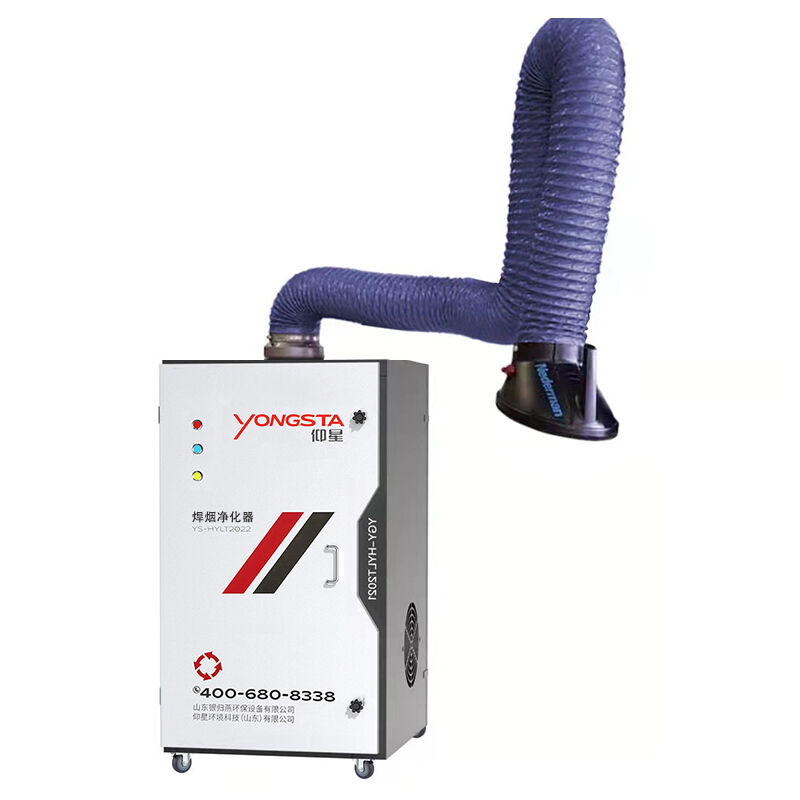
The fume purifier with HEPA and activated carbon employs a source capture methodology that represents a fundamental advantage over general ventilation approaches. Rather than attempting to dilute contaminants throughout an entire facility, source capture systems position intake points directly at the location where fumes generate, capturing pollutants before they disperse into the broader workspace. This targeted approach delivers multiple critical benefits that make the fume purifier with HEPA and activated carbon far more effective than traditional ventilation strategies. When contaminants are captured at their source, workers receive immediate protection because harmful fumes never enter their breathing zone. The proximity of the capture hood or arm to the work process creates a localized negative pressure zone that draws fumes away from the operator and into the filtration system within milliseconds of generation. This rapid capture prevents exposure to peak concentrations that occur immediately after fume generation, when particle counts and chemical vapor levels reach their highest levels. In contrast, general ventilation systems rely on air changes per hour to gradually dilute contaminants, meaning workers continue breathing polluted air until sufficient dilution occurs. The source capture design of a fume purifier with HEPA and activated carbon also dramatically reduces the volume of air requiring treatment. General ventilation must process the entire room volume multiple times per hour, demanding powerful fans, extensive ductwork, and substantial energy consumption. Source capture systems only need to handle the relatively small airflow volume directly around the contamination source, typically measured in hundreds of cubic feet per minute rather than thousands. This focused approach allows the fume purifier with HEPA and activated carbon to operate with smaller, more energy-efficient motors while still achieving superior contaminant removal. The reduced airflow requirements also mean filters last longer because they process less total air volume between replacements. Positioning flexibility represents another significant advantage of source capture fume purifiers with HEPA and activated carbon. Flexible articulating arms allow operators to position the capture hood precisely where needed, adjusting as work processes change throughout the day. This adaptability proves essential in dynamic manufacturing environments where workers perform various tasks requiring different equipment setups and working positions. The capture hood can be moved out of the way when not needed and quickly repositioned when fume-generating activities resume. Many modern fume purifiers with HEPA and activated carbon incorporate intelligent airflow designs that maximize capture efficiency while minimizing energy consumption. Tapered hoods create velocity profiles that effectively capture fumes without requiring excessive suction power. Some models include airflow sensors that automatically adjust fan speed based on detected contaminant levels, ramping up during active work periods and reducing to standby mode during breaks. This intelligent operation optimizes both protection and efficiency. The source capture approach also prevents cross-contamination between different work areas. In facilities with multiple processes generating different types of fumes, individual fume purifiers with HEPA and activated carbon can be deployed at each station, ensuring that contaminants from one area do not migrate to other zones. This isolation becomes particularly important when incompatible chemicals are used in different parts of the facility, as mixing their vapors could create hazardous reactions or undesirable odors.
Cost-Effective Operation with Recirculation and Low Maintenance Requirements

Cost-Effective Operation with Recirculation and Low Maintenance Requirements

The economic advantages of a fume purifier with HEPA and activated carbon extend far beyond the initial purchase price, delivering ongoing savings that make these systems highly cost-effective over their operational lifetime. The recirculation design represents the primary driver of operational savings, fundamentally changing the economics of air purification compared to exhaust-based ventilation systems. Traditional exhaust ventilation removes contaminated air from the building and discharges it outdoors, which simultaneously removes the energy invested in heating or cooling that air to comfortable temperatures. In cold climates, exhausting heated air forces the HVAC system to continuously warm incoming replacement air, substantially increasing heating costs throughout winter months. Similarly, in hot climates, exhausting cooled air wastes the energy spent on air conditioning, driving up cooling expenses during summer. The fume purifier with HEPA and activated carbon eliminates this energy waste by filtering contaminants from the air and returning clean air to the workspace. The conditioned air remains inside the building, maintaining comfortable temperatures without forcing the HVAC system to compensate for continuous air loss. Facilities operating multiple shifts can realize thousands of dollars in annual energy savings from this recirculation approach alone. The savings become even more dramatic in extreme climates where heating and cooling represent major operational expenses. Beyond energy savings, the fume purifier with HEPA and activated carbon delivers predictable, manageable maintenance requirements that minimize downtime and labor costs. The primary maintenance task involves periodic filter replacement, which occurs on a schedule determined by usage intensity and contaminant loading. Most manufacturers design their systems with clear filter saturation indicators, either through pressure differential gauges or electronic monitoring systems that track airflow resistance. These indicators provide advance warning when filters approach capacity, allowing maintenance teams to schedule replacements during planned downtime rather than responding to emergency failures. The actual replacement process requires minimal time and no specialized skills. Modern fume purifiers with HEPA and activated carbon feature tool-free access panels and slide-out filter cartridges that maintenance personnel can exchange in minutes. This simplicity reduces labor costs and ensures that even facilities without dedicated maintenance staff can keep their purification systems operating effectively. Filter disposal also remains straightforward, with most filters classified as non-hazardous waste that can be disposed of through standard commercial waste streams, though facilities should verify local regulations regarding captured contaminants. The robust construction of quality fume purifiers with HEPA and activated carbon contributes to long service life with minimal repairs. Brushless DC motors eliminate the wear associated with carbon brushes, while sealed bearings protect against dust infiltration. Powder-coated steel or aluminum housings resist corrosion and physical damage in demanding industrial environments. Many manufacturers offer warranties extending five years or more, reflecting confidence in their products' durability. This reliability translates to lower total cost of ownership as businesses avoid frequent equipment replacement and unexpected repair expenses. The modular design of many fume purifiers with HEPA and activated carbon also supports cost-effective capacity expansion. As production volumes increase or additional workstations come online, facilities can deploy additional units rather than redesigning entire ventilation systems. This scalability allows businesses to match their air purification capacity to current needs without overinvesting in excess capacity that may not be utilized for years. The combination of energy savings, low maintenance requirements, long service life, and scalable deployment makes the fume purifier with HEPA and activated carbon an economically sound investment that delivers returns throughout its operational lifetime while protecting worker health and ensuring regulatory compliance.

Get a Free Quote

Our representative will contact you soon.
Email
Name
Company Name
Message
0/1000
email goToTop